
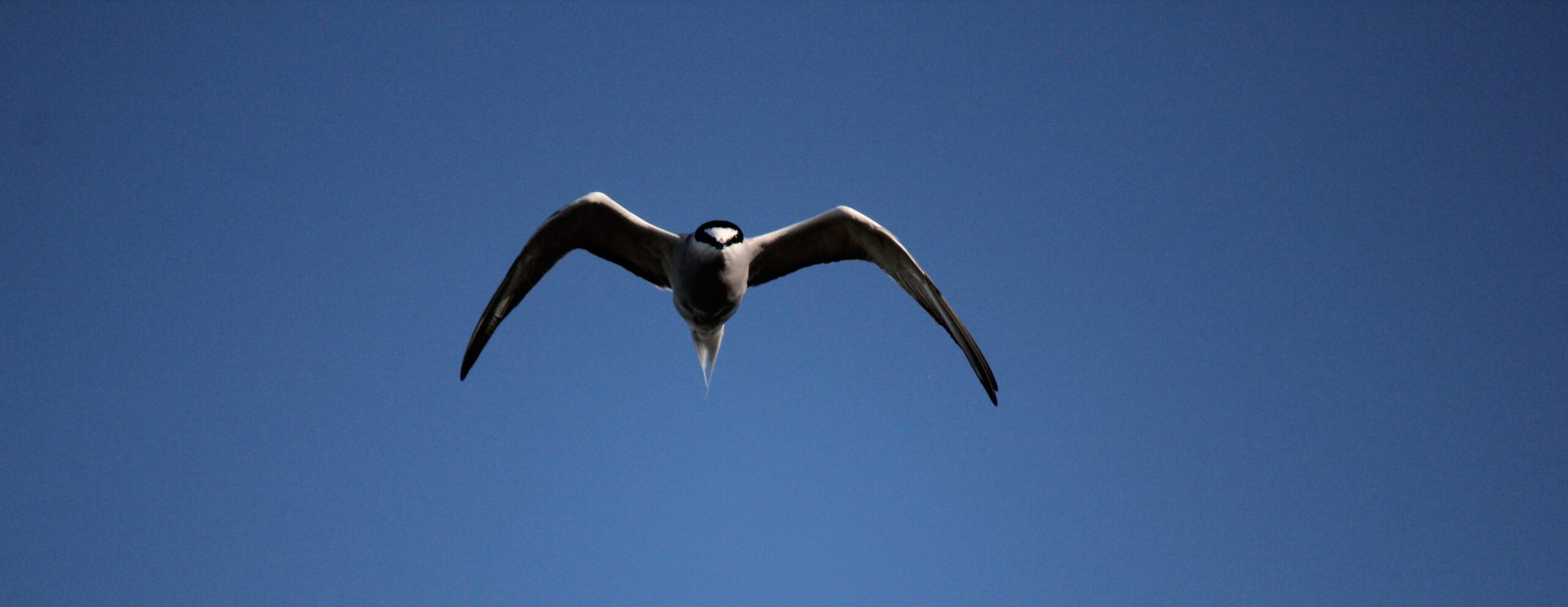
After years of planning and three summers in the field, the first statewide survey of Alaska’s Aleutian terns has reached a big milestone. The Prince William Sound Science Center shared the update this spring, and it’s a good moment to look at what the survey set out to do.
The update
PWSSC has been part of the survey for three years, and the data will be used to estimate how many Aleutian terns breed in Alaska. That number matters a lot, since earlier research pointed to roughly a 90 percent decline at known colonies over three generations.
In summer 2025, crews finished covering more than two-thirds of Alaska’s coastline with aerial and ground surveys. That included the western Aleutian Islands and western Alaska from Cape Newenham up to Point Hope. One surprise: the Yukon-Kuskokwim Delta had the most colonies, but most of the birds there turned out to be Arctic terns, not Aleutian terns.
How a survey like this works
Small planes fly the coast about 500 feet up during June and July to spot colonies. Because you can’t reliably tell the two tern species apart from the air, ground crews then hike in, count each colony several times and confirm which species is there. It’s slow, careful work across some of the most remote coastline in the country.
The effort brought together USFWS, the U.S. Forest Service, the National Audubon Society Seabird Institute, Oregon State University, McDonald Data Sciences, Tern Again Consulting and PWSSC.
What comes next
With field work done, the focus shifts to crunching the numbers. The results will give the clearest picture yet of how the species is doing in Alaska and help shape decisions about its protection. If you spend time on the coast, you can help by giving nesting beaches space and reporting any colonies to the U.S. Fish and Wildlife Service at ak_mbm@fws.gov.
Read the full update from PWSSC: Statewide Aleutian Tern Survey Field Work Complete
Featured photo: U.S. Fish and Wildlife Service